
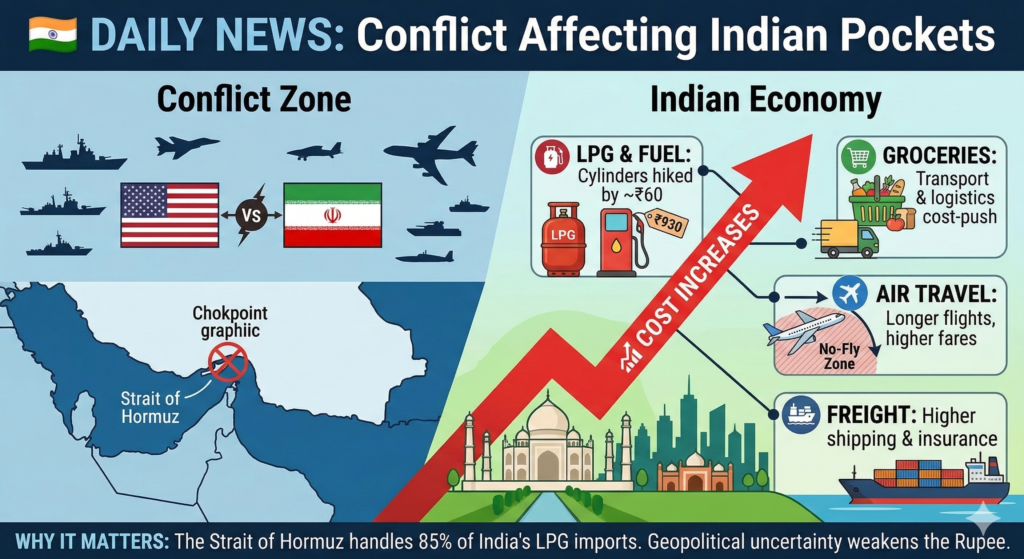
The escalating military conflict involving the United States, Israel, and Iran has rapidly transitioned from a geopolitical crisis to an economic burden for Indian citizens. As of March 7, 2026, several essential sectors have already seen sharp price increases due to global supply chain disruptions.
Here is a detailed breakdown of how this conflict is affecting the Indian economy:
1. Rising Kitchen Expenses: LPG and Fuel
The most immediate impact on Indian households is the surge in cooking gas prices.
- LPG Price Hike: On Saturday, March 7, 2026, the price of a non-subsidized 14.2 kg domestic LPG cylinder was increased by ₹60.
- City-Wise Rates: New rates have reached ₹913 in Delhi, ₹912.50 in Mumbai, ₹939 in Kolkata, and ₹928.50 in Chennai.
- Commercial Impact: Prices for 19 kg commercial cylinders used by restaurants and hotels rose by approximately ₹115, totaling over a ₹300 increase in just the last three months.
- Supply Concerns: The Strait of Hormuz, currently a focal point of the conflict, handles nearly half of India’s crude oil and LPG imports. While the government assures that there are sufficient fuel stocks for about 50 days, prolonged disruption could lead to further price hikes for petrol and diesel.
2. Logistics and Global Trade: Shipping Surges
India’s trade routes are facing severe bottlenecks as maritime traffic through the Middle East becomes increasingly dangerous.
- Increased Freight Costs: Carriers have introduced Emergency Conflict Surcharges ranging from $2,000 to $4,000 per container.
- Insurance Spikes: Marine insurers have begun withdrawing war-risk coverage or sharply increasing premiums for vessels transiting the Gulf.
- Broader Economic Hit: These logistical hurdles are raising the landed costs of raw materials, which is expected to compress margins for Indian industries like automobiles, chemicals, and fertilizers.
3. Air Travel: Cancellations and Costly Routes
The aviation sector is struggling as Iranian and other Middle Eastern airspaces face partial closures or avoidance by international carriers.
- Massive Cancellations: Over 700 flights have been cancelled daily due to the conflict, with major Indian airports like Delhi and Mumbai reporting dozens of grounded international services as of March 6.
- Skyrocketing Fares: Rerouting flights away from the conflict zone has increased fuel consumption and flight times. One-way economy fares from London to Mumbai have reportedly surged to nearly ₹2.9 lakh, while business class tickets have touched ₹9 lakh.
- Travel Time: Long-haul routes to the US and Europe are becoming significantly costlier and longer as planes are forced to take alternative paths, such as via Ethiopia.
4. Financial Markets and the Rupee
The uncertainty has caused panic in the Indian markets, with investors moving toward “safe-haven” assets like gold.
- Stock Market Bleeding: The BSE Sensex and Nifty50 have dropped over 2.5% since the conflict began, wiping out approximately ₹16.32 lakh crore in investor wealth in just two trading sessions.
- Rupee Devaluation: The Indian Rupee has reached an all-time low against the US Dollar, which automatically makes imports of crude oil and electronics more expensive for India.